Disclosure: This post contains affiliate links. If you buy through them, I may earn a commission at no extra cost to you. As an Amazon Associate I earn from qualifying purchases. Read our full affiliate disclosure.
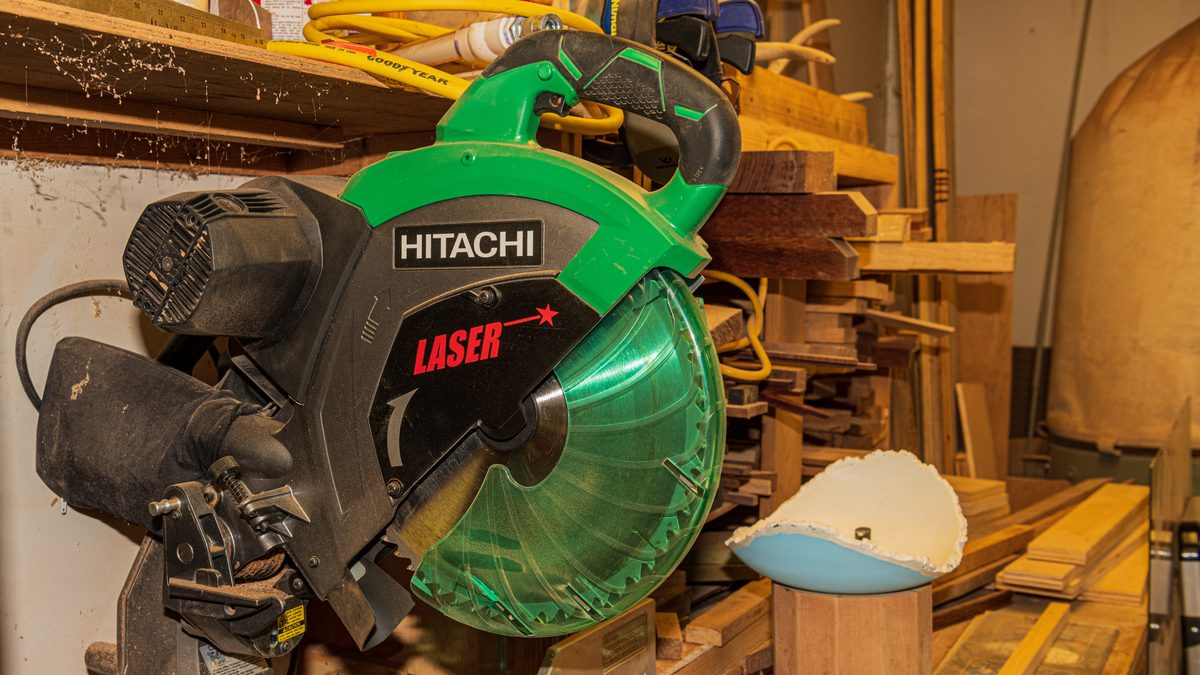
Search “chop saw vs miter saw” and you’ll find people using the two names for the same tool, and other people insisting they’re completely different machines. Both camps are partly right. In everyday shop talk, lots of woodworkers call their miter saw a “chop saw” because the blade chops down through the board. But in tool catalogs, a true chop saw is a metal-cutting saw that only makes straight cuts, and it is not something you want to use on your trim.
This guide clears up the naming, explains what each saw is built to do, and helps you decide which one belongs in a beginner woodworking shop.
Chop Saw vs Miter Saw: The Short Answer
- A true chop saw is a metal cut-off saw. It pivots straight down and makes 90-degree cuts in steel pipe, angle iron, rebar and tubing, usually with a 14″ abrasive wheel or a carbide cold-cut blade.
- A miter saw is a woodworking saw. It also pivots down, but the table rotates for angled (miter) cuts and on most models the head tilts for bevel cuts. It uses a toothed wood-cutting blade, usually 10″ or 12″.
- In casual shop talk, “chop saw” often just means a miter saw. If a woodworking plan says “cut it on the chop saw,” it means the miter saw.
What Is a Chop Saw (and What Is It Used For)?
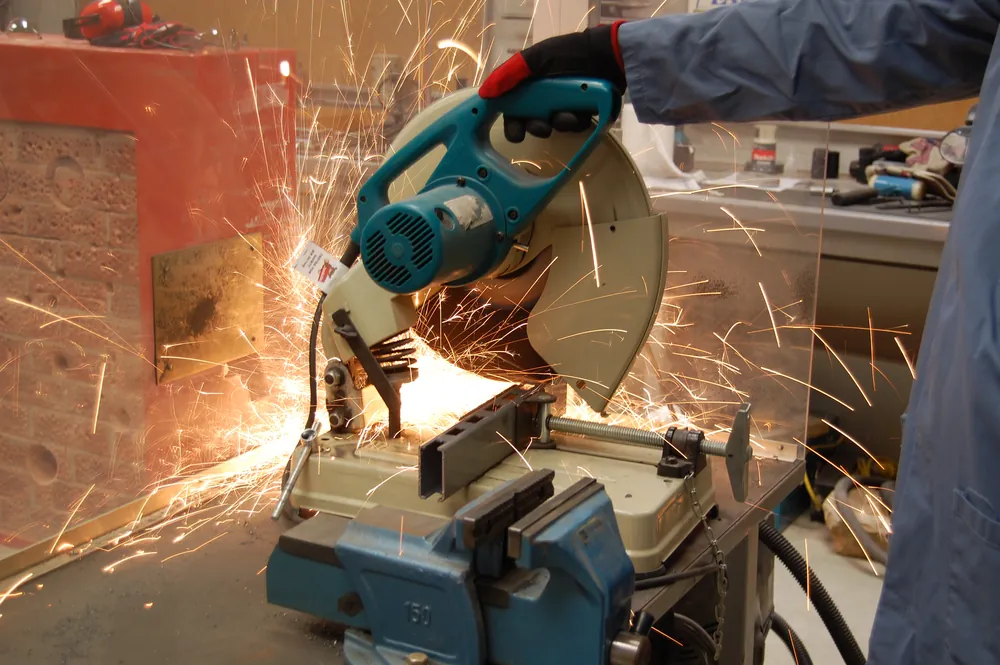
A chop saw (also sold as a cut-off saw or metal cut-off machine) is a motor and blade on a hinged arm, mounted over a flat steel base with a built-in vise. You clamp the workpiece in the vise, pull the handle down, and the blade cuts straight through. There’s no rotating table and usually no bevel. Many vises angle to about 45 degrees for rough miters, but precise angle work isn’t their job.
What is a chop saw used for? Mostly metalwork and construction jobs like:
- Cutting steel pipe, conduit, square tubing and angle iron to length for welding or fabrication
- Cutting rebar, threaded rod and strut channel on job sites
There are two main types:
- Abrasive chop saws. These use a thin, bonded abrasive wheel (14″ is the common size) that grinds through metal rather than cutting it with teeth. They’re inexpensive, but they throw lots of sparks, leave hot burrs, and the wheel wears down as you use it.
- Cold-cut (dry-cut) metal saws. These use a toothed carbide or cermet blade made for steel, spinning much slower than a wood saw. Cuts are cooler and cleaner with fewer sparks, but the saws and blades cost more.
Can a chop saw cut wood? An abrasive one can grind through a 2×4, but it burns the cut, mixes sparks with sawdust and offers no useful angle settings. For woodworking, it’s the wrong tool.
What Is a Miter Saw?
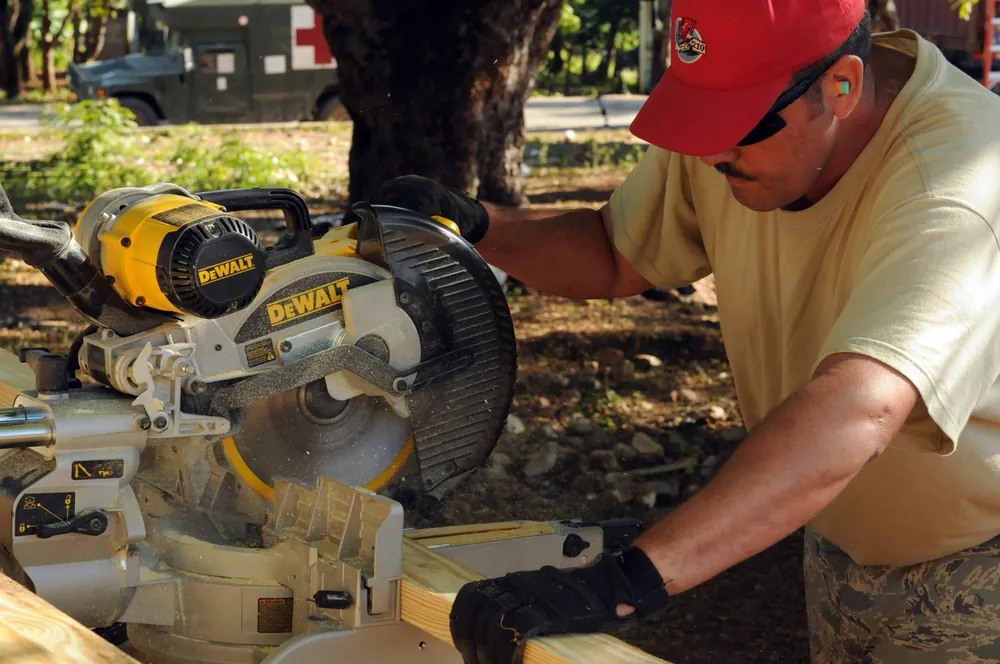
A miter saw is a crosscutting saw for wood. The blade sits on a pivoting arm above a rotating turntable, with a fence at the back to hold the board. Swing and lock the turntable to cut accurate angles for picture frames, trim, baseboard and furniture parts.
Most home-shop miter saws use a 10″ or 12″ blade. A 10″ saw is lighter, has cheaper blades and is plenty for most DIY work; a 12″ cuts wider, thicker stock but is heavier. Compact 7-1/4″ and 8-1/2″ models also exist.
Typical specs look like this (always check the manual for your exact model):
- Miter range: usually about 45 to 50 degrees each way, with some models going to around 60 degrees on one side. Most have detents (click stops) at common angles like 0, 15, 22.5, 31.6 and 45 degrees.
- Bevel range: usually 0 to about 45 or 48 degrees, either to one side or to both.
- Crosscut capacity at 90 degrees: roughly 5-1/2 to 6″ for a non-sliding 10″ saw (about a 2×6), roughly 7-1/2 to 8″ for a non-sliding 12″ (about a 2×8), and roughly 11 to 16″ for sliding models depending on size and rail design.
Types of Miter Saws
- Standard miter saw. Miters only; the head doesn’t tilt. Less common now.
- Compound miter saw. The table rotates and the head tilts, so you can combine a miter and a bevel in one cut (that’s the “compound” part).
- Sliding compound miter saw. The motor and blade ride on rails, roughly doubling crosscut width (enough for 1×12 shelves). Most need extra space behind the saw for the rails.
- Dual-bevel miter saw. The head tilts both left and right, so you can make mirror-image bevel cuts without flipping long boards end for end. Handy for trim, not essential for a beginner.
Whatever type you buy, it works best on a stable stand with support on both sides. If you don’t have one yet, our DIY miter saw stand plans show how to build one with storage underneath.
The Difference Between a Chop Saw and a Miter Saw
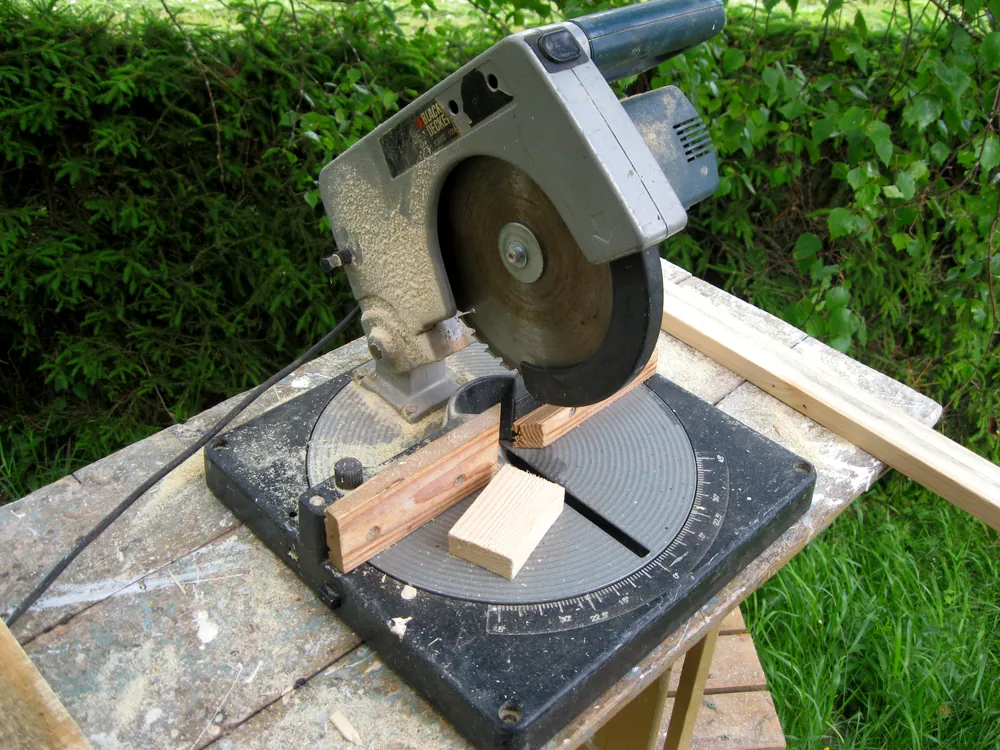
The core difference between a chop saw and a miter saw is the material each one is built for. A chop saw is made to cut metal with straight cuts; a miter saw is made to cut wood accurately at angles. Blade type, speed, guards, angle adjustments and work holding all follow from that.
| Feature | Chop saw (metal cut-off) | Miter saw |
|---|---|---|
| Main material | Steel and other metals | Wood, trim, some plastics |
| Blade | 14″ abrasive wheel or carbide cold-cut blade for metal | 10″ or 12″ toothed carbide wood blade (smaller compact models exist) |
| Angle cuts | Mostly 90 degrees; vise may angle for rough miters | Accurate miters (about 45-60 degrees) and bevels (about 45-48 degrees) |
| Holding the work | Built-in clamping vise | Fence plus optional hold-down clamp |
| Cut quality | Fine for fabrication; abrasive cuts leave hot burrs | Clean, square, ready-to-assemble wood cuts |
| Sparks and debris | Sparks (abrasive) or hot metal chips | Sawdust, collected by a bag or shop vac port |
| Typical users | Welders, fabricators, contractors | Woodworkers, DIYers, trim carpenters |
| Best for beginners who | Plan to build with metal | Build furniture, shelves, frames, trim or outdoor projects |
So “miter saw vs chop saw” has two answers: if you mean a metal chop saw, they’re different tools for different materials; if “chop saw” is slang, you’re really choosing a type of miter saw, covered below.
Why You Shouldn’t Swap Blades Between Them
It’s tempting to make one saw do both jobs with a blade change. Don’t.
- Never put an abrasive wheel on a miter saw. Abrasive wheels have a maximum speed rating, and a miter saw’s no-load speed can exceed it, which can make the wheel fail and break apart. Miter saw guards aren’t designed to contain a shattering wheel, and the sparks can ignite sawdust in the dust bag or around the saw.
- Don’t cut steel with a wood blade. Wood blade teeth aren’t made for steel. They can chip or break off and fly out, and the blade can grab the work and jerk it. Aluminum and other non-ferrous metals are a separate case: some miter saw makers allow it with a blade specifically rated for non-ferrous metal and the work clamped down, but only if your saw’s manual says so.
Rule of thumb: use only the blades and materials your manual lists.
How to Use a Chop Saw or Miter Saw Safely
Whether you’re learning how to use a chop saw for metal or a miter saw for wood, the motion and most of the mistakes are the same. Read the manual, then build these habits:
- Check that the saw is square. Unplugged (or battery out), lower the blade and hold a square against the fence and the blade body, not the teeth. Confirm with a test cut in scrap, and check the bevel stop against the table the same way.
- Support long stock. A long overhanging board can tip or pinch the blade. Use supports level with the saw table, or a stand like our miter saw stand.
- Hold the work firmly against the fence and table. Use the hold-down or a clamp when you can, especially on narrow pieces. If you need clamps, the VEVOR 36″ quick-change F clamps are one option (Check price on Amazon).
- Keep your hands out of the blade path. Many saws mark a no-hands zone on the table; keep your hand several inches from the blade, and never cross your arms to hold work on the other side.
- Use a stop block for repeat cuts. Clamp a block to the fence extension for identical lengths, and make sure the piece you’re cutting off isn’t trapped between the blade and the block, where it can bind and kick back.
- Let the blade reach full speed before cutting, then feed down smoothly. On a slider, pull out, lower, then push toward the fence.
- Let the blade stop before you lift it. Release the trigger at the bottom and wait for the blade to stop before raising the head; a spinning blade can grab and throw offcuts.
- Don’t cut pieces that are too small to hold safely. Cut them from a longer board, and clamp or cradle round stock so it can’t roll.
- Wear eye and hearing protection, and a dust mask for wood. For metal chop saws, add face protection and gloves, keep flammables (including sawdust) away from the sparks, and remember freshly cut metal is hot.
Which Should a Beginner Buy?
Start with what you’ll actually cut:
- Mostly wood projects (shelves, frames, workbenches, outdoor furniture, trim): buy a miter saw, not a chop saw.
- Mostly metal (welding carts, gates, railings): a metal chop saw makes sense. Abrasive is cheaper; cold-cut is cleaner if you’ll cut lots of steel.
- Both: plan on two separate saws.
If you’re choosing a miter saw for woodworking, here’s a simple guide:
- Tight budget or small space: a 10″ non-sliding compound miter saw. It handles 2x4s, 2x6s, trim and most project parts.
- Wider boards and shelving: a 10″ or 12″ sliding compound miter saw, if you have room behind it for the rails.
- Lots of trim and crown molding: consider dual-bevel. Otherwise, single-bevel is fine for a first saw.
- Cordless vs corded: cordless is convenient if you already own the batteries; otherwise corded usually costs less.
Brands like DeWalt, Makita, Metabo HPT, Bosch, Ryobi and Ridgid all make 10″ and 12″ miter saws; compare current specs for crosscut capacity, fence height and how easily the angles lock in accurately. The blade matters too: a higher tooth count gives cleaner cuts on trim and plywood.
Do you need a miter saw on day one? Not necessarily. As our essential woodworking tools for beginners list notes, a circular saw and a speed square can handle crosscuts while you learn, and our woodworking on a budget plan shows how to sequence purchases. A handsaw also works for occasional angled cuts; a Japanese pull saw like the KINGTOOL 10″ Ryoba (Check price on Amazon) with a simple miter box is a low-cost way to start. Comparing handheld saws? See track saw vs circular saw. A miter saw becomes worth it once you’re making lots of repeat crosscuts or angled joints.
A miter saw station needs more wall length than you’d expect. Our small garage woodworking shop layout guide shows how to fit a saw station into a one-car garage.
FAQ
Is a chop saw the same as a miter saw?
Not technically. A true chop saw is a metal cut-off saw for straight cuts; a miter saw cuts wood at adjustable angles. Many people still call a miter saw a “chop saw” informally.
What is a chop saw used for?
Cutting metal stock like steel pipe, tubing, angle iron and rebar to length, mainly for fabrication, welding and construction work.
Can a miter saw cut metal?
Not steel. Some miter saws can cut aluminum and other non-ferrous metals with a special non-ferrous blade, but only if the manual allows it. Never fit an abrasive wheel to a miter saw.
Should I get a 10″ or 12″ miter saw?
For most beginners, a 10″ saw is enough and its blades are cheaper. Choose 12″ (or a slider) if you regularly cut 2x8s and wider boards or thick posts.
Do I need a sliding miter saw?
Only if you often crosscut boards wider than about 6″ to 8″. A non-sliding saw is lighter, cheaper, easier to keep accurate and takes less space.
Final Thoughts
The chop saw vs miter saw debate mostly comes down to naming. A true chop saw cuts metal; a miter saw cuts wood at precise angles. For beginner woodworking, a 10″ compound miter saw on a solid stand is the tool most people really mean, and with a square blade, good support and a stop block, it makes projects faster and more accurate.
Ready to use it? Try a quick build from our easy scrap wood projects or the simple 2×4 workbench plan; both are full of straight crosscuts.
Featured photo: Puddin Tain, CC BY-SA 2.0, via Wikimedia Commons (cropped)